
Teeth Breaking in Half — Have you ever felt a sudden crack while chewing and wondered if your tooth just split?
Dental studies show that cracked or fractured teeth are one of the most common adult dental emergencies. According to the American Association of Endodontists, millions of teeth are treated every year due to cracks that were ignored for too long. What often starts as mild discomfort during chewing can quickly turn into severe pain, infection, or even tooth loss. Factors like enamel erosion, cavities, trauma, grinding (bruxism), and aging all increase the risk. In fact, the average teeth breaking age is rising because adults are keeping their natural teeth longer, but weaker enamel makes them vulnerable.
Sometimes the damage begins subtly — like a small crack, a chipped tooth up close, or minor sensitivity. Other times, it feels like a tooth breaking in pieces while eating something hard. Ignoring early warning signs can lead to root damage or costly procedures.
In this detailed guide, you’ll discover the 5 dangerous signs of Teeth Breaking in Half, understand why it happens, learn how long you can safely wait, and explore treatment options that can save your smile before it’s too late.
One of the earliest signs of Teeth Breaking in Half is sudden pain when biting down. You may especially notice discomfort during teeth breaking while eating hard foods like nuts, ice, or candy. This pain happens because pressure causes the cracked parts of the tooth to move slightly, irritating the inner pulp.
The pain may come and go, making it easy to ignore. But repeated pressure can worsen the crack and eventually cause the tooth breaking in pieces. If you feel pain that disappears when you release pressure, that’s a classic cracked tooth symptom. Early dental intervention at this stage can prevent the need for a root canal or extraction.
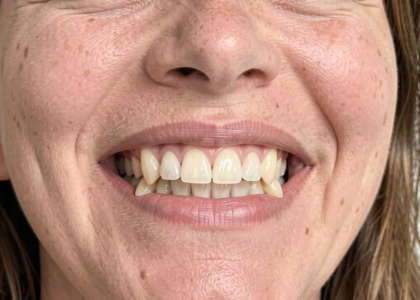
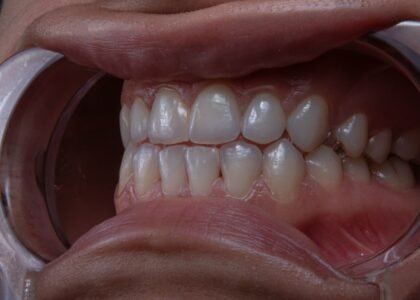
Sometimes you can physically see damage — especially when examining a chipped tooth up close in the mirror. A small visible line across the surface or a missing corner of the tooth may seem minor, but it could indicate structural weakness.
Even small cracks allow bacteria to enter, leading to decay inside the tooth. Over time, what appears to be a small chip can expand into a full break in Half. Early treatment, like bonding or a crown, can prevent further splitting and preserve your natural tooth.
If your tooth suddenly reacts strongly to hot coffee or cold water, it may signal internal damage. Cracks expose dentin, the sensitive layer beneath enamel. This sensitivity often appears before the tooth visibly splits.
Many people assume sensitivity is temporary, but in cases of Teeth Breaking in Half, it can mean the inner pulp is exposed or inflamed. If untreated, bacteria can infect the pulp, requiring a root canal. Sensitivity that worsens over days is a red flag.

When a crack extends deep enough, bacteria can enter and cause infection. You might notice swelling, pus, or tenderness around the gum line. In severe cases, abscesses develop, causing facial swelling and fever.
At this stage, patients often ask, “Can a broken tooth fix itself?” Unfortunately, once infection sets in, natural healing is impossible. Immediate dental treatment is necessary to prevent the spread of infection to surrounding tissues.
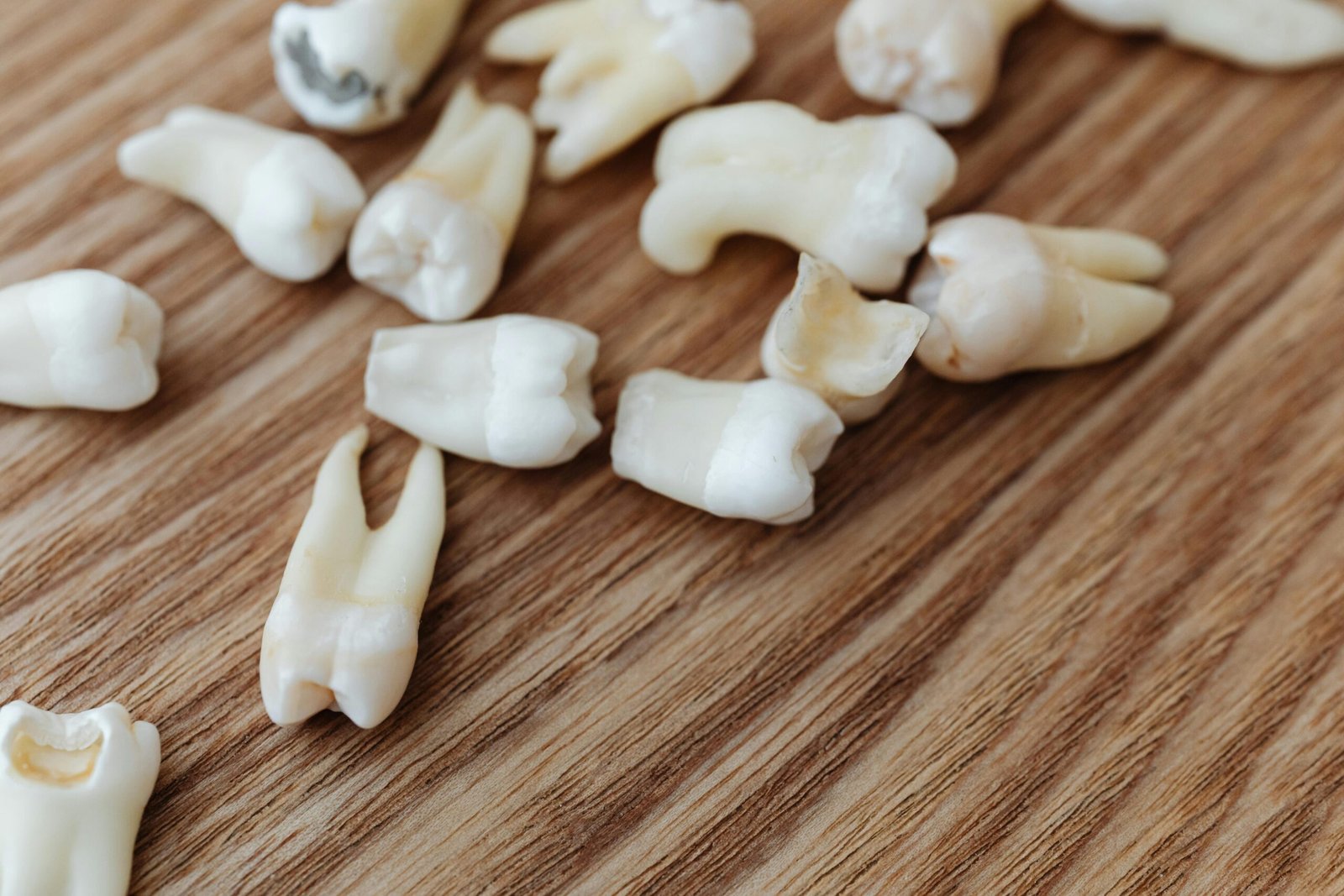
The most obvious and serious sign is when the tooth actually splits, or a portion falls off. You may experience a tooth breaking in pieces or feel a sharp edge with your tongue.
Many people wonder, “How long can you leave a broken tooth for?” The answer is: not long. Delaying treatment increases infection risk and weakens surrounding teeth. Temporary solutions like a broken tooth cover-up kit may reduce discomfort, but professional care is essential.
Teeth are strong, but they are not indestructible. Daily grinding (bruxism), untreated cavities, large fillings, trauma from accidents, and chewing hard foods all increase fracture risk. Research shows that enamel weakens over time, especially after age 40, making Teeth Breaking in Half more common in adults.
Some people even search for tooth breaking in dream meaning, often associating it with stress or anxiety. Interestingly, stress-related grinding during sleep is a real cause of tooth fractures. Wearing a nightguard can significantly reduce risk.
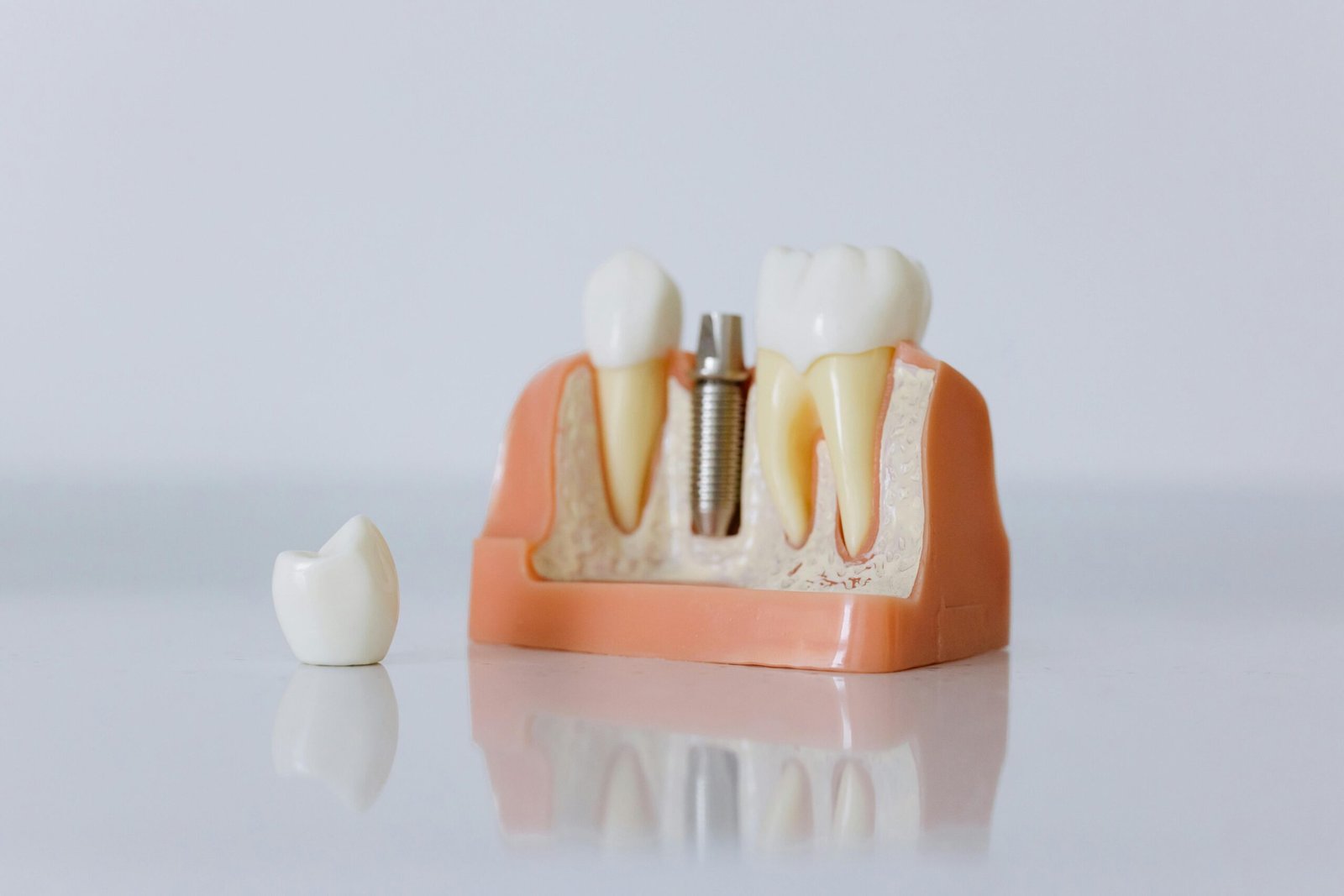
Treatment depends on severity. Small cracks may only need dental bonding. Larger fractures typically require crowns to hold the tooth together. If the pulp is infected, a root canal may be necessary before placing a crown.
In severe cases where the tooth splits vertically, extraction may be required. Early detection is key — the sooner you treat a tooth breaking in Half, the higher the chance of saving the tooth.
If you think you may have gum disease, we are here to help! Make an appointment with at our tooth lab clinic office by calling (925) 705-7093 or by booking an appointment online.
Ignoring early warning signs of Teeth Breaking in Half can turn a minor crack into a major dental emergency. From chewing pain to visible fractures, your teeth often give signals before serious damage occurs.
Taking quick action not only saves money but can save your natural tooth. If you notice any signs discussed in this guide, schedule a dental check-up immediately. Your smile is worth protecting — and early treatment makes all the difference.
No, Teeth Breaking in Half cannot repair naturally. Once enamel cracks, professional treatment is required.
If you’re asking how long you can leave a broken tooth for, the safest answer is: seek help immediately. Waiting increases infection risk.
Teeth breaking while eating usually occurs due to weakened enamel, cavities, or biting hard foods.
There isn’t a fixed age for breaking teeth, but fractures are more common in adults over 40 due to enamel wear.
A chipped tooth up close may look small, but can develop into Teeth Breaking in Half if untreated.